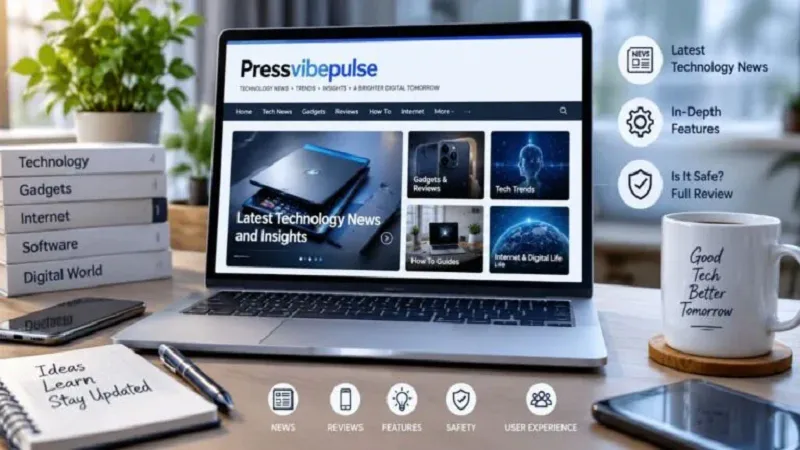
The internet has become an essential source of information for people who want to learn about technology, business, lifestyle, travel, and other popular subjects. Digital publishing platforms make it easier to explore different topics without visiting multiple websites.PressVibePulse Com is part of the online publishing landscape, where readers explore general information, trending topics, and informative articles.
Modern readers prefer websites that present information clearly, organize articles into useful categories, and make online research convenient. A well-structured digital publication can help visitors discover unfamiliar subjects, understand emerging trends, and find answers to everyday questions.
Understanding the purpose of a website is an important first step before using its content regularly. Readers should consider its subject areas, writing quality, navigation, and information sources. This approach helps them distinguish introductory articles from verified reporting and specialist guidance.
This guide explores the digital publishing concept associated with PressVibePulse, the types of subjects readers may encounter, the importance of reliable information, and practical ways to make online reading more productive.
What Is PressVibePulse Com?
PressVibePulse is a name associated with online publishing and general-interest informational content. Available descriptions connect the brand with subjects such as technology, business, lifestyle, digital trends, and other topics that attract online readers. However, readers should check the exact website address and its current content rather than assume that every domain using a similar name belongs to the same publisher.
The name itself suggests three ideas. Press” refers to publishing and news, “vibe” reflects culture and public interests, while “pulse” represents awareness of the latest developments. Together, these words communicate the idea of a digital platform designed to help readers explore information and follow topics that interest them.
A general-interest publication differs from a specialist website. Instead of concentrating exclusively on one subject, it may present articles for readers with different interests and levels of experience.
Before relying on a particular article, visitors should review its author information, publication date, references, and supporting evidence. These details are especially important when an article discusses health, money, legal matters, or other subjects where inaccurate advice can have serious consequences.
Main Topics and Content Categories
One potential advantage of a multi-topic publishing website is the opportunity to explore several subjects in one place. Organized categories make it easier for readers to find content that matches their interests and needs.
1. Technology and Digital Innovation
Technology influences how people communicate, work, study, shop, and manage their daily activities. Technology articles cover a wide range of topics, including software updates, mobile apps, artificial intelligence, cybersecurity, online services, and digital tools.
People new to a technology can learn more easily through clear explanations and practical, real-world examples. For instance, an introductory guide might explain how a productivity application works, what features it offers, or how users can protect their information online.
Useful technology content should explain technical terms instead of assuming that every visitor has advanced knowledge. It should also distinguish confirmed product features from predictions or promotional claims.
When exploring pressvibepulse com for technology-related information, readers should verify software specifications, security recommendations, and product announcements through official documentation whenever accuracy matters.
2. Business and Entrepreneurship
Business information helps readers understand professional opportunities, workplace developments, marketing methods, and the challenges involved in running an organization.
Entrepreneurs may look for guidance about creating business plans, understanding customers, managing expenses, improving customer service, or building an online presence. Students and professionals can also discover valuable insights into productivity, communication, leadership, and evolving workplace trends.
Practical business articles should explain their recommendations clearly and acknowledge that results depend on circumstances. A marketing strategy that works for a large company may not suit a small business with limited resources.
Readers should also evaluate financial claims carefully. Promises of guaranteed profits, effortless income, or risk-free investments deserve particular scrutiny. Reliable information should explain potential limitations and encourage informed decisions.
3. Lifestyle and Everyday Living
Lifestyle content covers the habits, choices, and interests that shape everyday experiences. Topics may include personal organization, home routines, time management, relationships, travel planning, and general well-being.
Articles in this category can help readers identify practical ways to organize their schedules, simplify household tasks, and make better use of their free time.
For example, a guide to daily planning might recommend preparing a short task list, organizing priorities, and reviewing unfinished work at the end of the day. These small steps can make responsibilities easier to manage.
Good lifestyle writing focuses on realistic suggestions rather than presenting one routine as suitable for everyone. Readers should tailor general advice to their individual needs and seek professional guidance whenever specialized expertise is necessary.
4. Travel and Cultural Discovery
Travel content introduces readers to destinations, local customs, sightseeing opportunities, transportation options, and trip-planning considerations.
A useful travel article explains what visitors might expect, how to prepare for a journey, and which details require confirmation before departure. Practical subjects include accommodation planning, travel documents, seasonal conditions, local transportation, and budgeting.
Travel information can change quickly. Entry requirements, prices, transport schedules, and opening hours should therefore be checked through official or current sources.
Cultural articles can also help readers understand traditions and everyday practices in different communities. Accurate writing should avoid stereotypes and recognize that customs may vary between regions and individuals.
5. Finance and Personal Money Management
Financial literacy is important for people who want to manage their income, control expenses, save for future needs, and understand basic financial products.
General financial articles may discuss budgeting, emergency savings, responsible borrowing, financial planning, and the differences between saving and investing.
A simple monthly budget, for example, can help readers compare income with essential expenses and identify opportunities to reduce unnecessary spending. Building an emergency fund may also provide additional flexibility when unexpected costs arise.
However, financial decisions depend on personal circumstances, local regulations, and individual risk tolerance. Readers should verify important information with qualified financial professionals or official institutions instead of relying solely on a general online article.
6. Health, Wellness, and Personal Development
Health and wellness articles often discuss everyday habits, physical activity, sleep routines, stress management, and general approaches to maintaining well-being.
Accessible educational content can help readers prepare questions for healthcare professionals and better understand common health-related terminology. Nevertheless, general articles should not replace individualized medical evaluation or treatment.
Personal development is another useful subject. Articles about communication, learning, goal-setting, and confidence can encourage readers to develop practical skills over time.
Strong content in these areas uses responsible language, identifies credible sources, and avoids unsupported promises. Readers should be particularly cautious of miracle cures, exaggerated results, and recommendations that contradict established professional guidance.
How a Digital Publishing Website Helps Readers
Digital publications offer several advantages when their content is clear, relevant, and appropriately organized.
Convenient Access to Information
Online articles allow readers to explore topics at their convenience. Instead of depending exclusively on printed material, visitors can search for information using a computer, tablet, or smartphone.
This flexibility makes digital publishing useful for students, professionals, business owners, and people who enjoy learning about unfamiliar subjects.
Discovering New Ideas
A multi-topic website can introduce readers to subjects they might not otherwise investigate. Someone researching a technology question may discover related discussions about productivity, business, or digital security.
This type of exploration can encourage curiosity, provided readers distinguish useful background information from unsupported claims.
Learning at Different Levels
Beginner-friendly explanations can make complex topics easier to understand. Clear headings, concise paragraphs, examples, and definitions help readers identify important points without becoming overwhelmed by technical language.
More detailed articles can build on these foundations by including evidence, practical demonstrations, expert perspectives, and links to original sources.
Supporting Informed Decisions
Well-researched content can help readers understand their options before making a decision. However, an article is most useful when it explains both benefits and limitations rather than presenting only one side.
Readers should compare information from multiple credible sources whenever the topic is important or the available evidence is uncertain.
Website Navigation and Reading Experience
Website design influences how easily visitors find and understand information. A practical publishing platform should provide a clear menu, recognizable categories, readable typography, and a search function when appropriate.
Articles should use descriptive headings that reflect their actual content. Short paragraphs and relevant examples can improve readability, especially on mobile devices.
Internal links are useful when they connect readers to genuinely related material. For instance, an introductory cybersecurity article might link to a separate guide about password managers or account recovery.
A good reading experience also requires attention to accessibility. Descriptive image text, sufficient contrast, keyboard-friendly navigation, and responsive page layouts can make content easier to use for a wider audience.
Readers exploring pressvibepulse com should assess these features directly on the exact domain they visit, rather than assuming that similar website names guarantee the same design or quality.
How to Evaluate Online Information
Finding an article through a search engine does not automatically mean that its claims have been independently verified. Readers can use several practical checks to assess reliability.
Check the Author and Publication Date
Look for the author’s name, relevant qualifications where appropriate, and the date the article was published or updated. Current information is particularly important for technology updates, regulations, travel requirements, and breaking developments.
Examine the Supporting Evidence
Trustworthy informational writing should provide evidence for important factual claims. Depending on the subject, useful references may include official documentation, scientific research, government publications, or statements from relevant organizations.
Compare Independent Sources
If a claim appears surprising or consequential, look for confirmation from reliable sources that are independent of the original article. Repetition across websites does not necessarily mean that a claim has been verified.
Recognize Misleading Headlines
Some headlines exaggerate events to encourage clicks. Compare the headline with the article itself and check whether the supporting information justifies the language used.
Protect Personal Information
Use ordinary online safety precautions when visiting unfamiliar websites. Avoid suspicious downloads, unexpected payment requests, and forms that request unnecessary sensitive information. A secure connection helps protect information in transit but does not, by itself, prove that a website or its content is trustworthy.
The Role of Search Engine Optimization in Digital Publishing
Search engine optimization, commonly called SEO, helps publishers organize content so that readers and search engines can understand its purpose.
Effective SEO begins with satisfying the reader’s actual question. A useful article needs a descriptive title, a logical heading structure, accurate information, and a clear explanation of the topic.
Keyword research helps writers identify the terms and phrases people commonly use to find information online. However, repeating a keyword excessively can make an article awkward and reduce its usefulness.
Publishers should prioritize original insights, relevant examples, editorial accuracy, and a positive user experience. Related articles should be linked naturally, while images should be relevant and optimized for performance.
A sustainable content strategy focuses on helping readers rather than producing large quantities of repetitive pages. Regular reviews can also identify outdated details and opportunities to improve existing articles.
Who May Benefit From Reading Digital Content Platforms?
General-interest publishing platforms can serve several audiences.
Students may use introductory articles to become familiar with a subject before consulting textbooks or academic resources.
Professionals may explore industry discussions, digital tools, and workplace trends to identify ideas worth investigating further.
Entrepreneurs can explore useful ideas about marketing, customer service, business management, and effective online communication.
Everyday readers may enjoy lifestyle guides, travel information, cultural topics, and practical explanations related to daily life.
The value of any publication ultimately depends on whether its articles meet the reader’s needs. A broad content library can be convenient, but specialist sources remain important for complex or high-stakes questions.
Conclusion
Digital publishing continues to shape how people discover information, follow trends, and learn about unfamiliar subjects. Platforms associated with general-interest publishing can provide convenient introductions to technology, business, lifestyle, travel, finance, and other areas.
PressVibePulse com is a search term connected with this kind of digital content, but readers should verify the exact domain and evaluate individual articles on their own merits. Clear writing, reliable references, transparent authorship, and current information are more meaningful indicators of quality than a website name alone.
By checking sources, comparing important claims, and following sensible online safety practices, readers can make better use of digital information. Whether researching a new technology, exploring a lifestyle idea, or learning a business concept, a thoughtful approach helps turn casual browsing into a more productive learning experience.